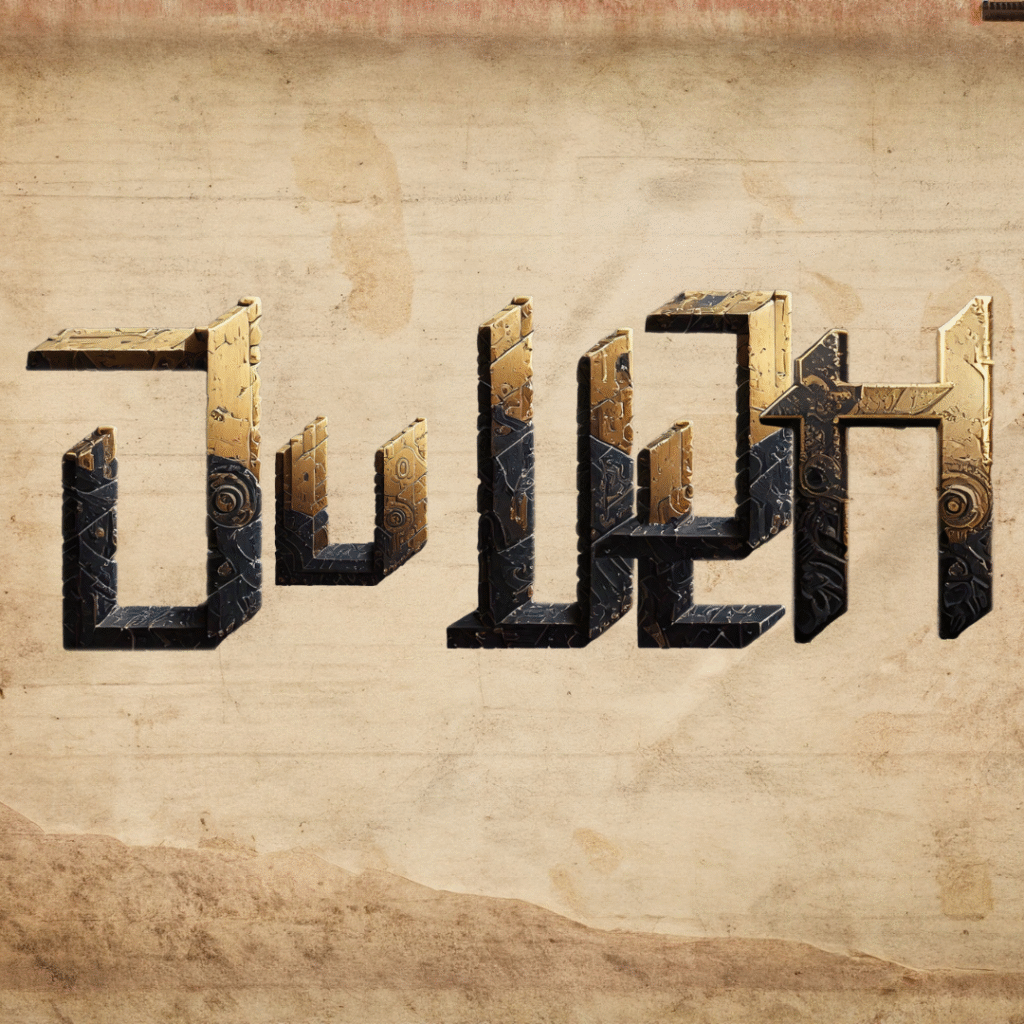
Miu Vera’Nychta

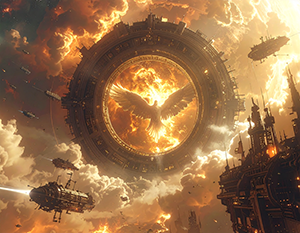
Miseo is a warm, temperate moon with a confusing day-night cycle for visitors because its cycles are driven by passing into the immense shadow of its parent, not rotation, as Miseo is tidally locked. Vera’nychta, meaning true night in the Haun’hai local language, occurs every few days as the moon passes into the darkest shade of its parent when Miseo’s own slightly elliptical orbit is closest to Huan’hai. In these events, Miseo can experience near-total darkness, except for the small amount of light that lenses around Huan’hai’s enormous horizon. When Huan’hai is furthest from its home star, Li, it is common to see frost or sporadic snow on the typically balmy world during this time as well.

However, it is the time-bending nature of the Huan’hai Incident that inspired stories of a very rare form of vera’nychta that occurred long ago, in the days before the event. In these stories, witnesses claim that a brilliant star could be seen in the night, growing brighter for decades before finally beginning to fade and disappear almost completely. Galatians knew this star, Dem, and recognized the unsettling signs of the event, but could never explain its unusually long period of brilliance until after the end of the Huan’hai Incident. Meanwhile, natives simply referred to it as Miu Vera’Nychta, meaning “the brilliant true nights.”

It has since been concluded that the bizarre, time-bending phenomenon in the Li system that caused the Huan’hai Incident allowed the inhabitants of that system to witness the Dem star supernova in slow motion. Yet for all the buzz around the few records kept of the time when Miu Vera’nychta was happening, like the massive shadow of Huan’hai, the nostalgia of the beautiful skylines it once produced still overshadows the tragic explanation for what painted the sky.

The Fell War

In the Prime Universe, the exact date this angelic civil war began is not known with precision, except that Galatian records note that the war spread to the Galat system over 18,000 years ago during the Ifset Rebellion on Sigma 95. No species in the seven systems under the Galatian influence has an exact date. Encounters with the emissaries of the Leng’gui, called Gonago’lai, suggest that it did not start in this universe at all, but began in the realm known only to beings like the archangel Michael, called Celeste. What is known about this horrific war is that it rippled throughout multiple dimensions, specifically wherever its chief leader, Halel, spread his rebellion against the Creator. Its casualties, planets often left devoid of life or so corrupted and insane that they are hardly recognizable from the paradise seeded, are numerous and scattered throughout dimensions, galaxies, and star systems. Also known by Galatians and Leng’gui, the fact is that the human races are relatively young and new to the war.

The consequences for joining with Halel are both severe and horrific. Although Halel’s own propaganda holds that these consequences are proof of the Creator’s intolerance and weakness, the truth is much darker. Whispered within the elite of Halel’s rebellion is growing unease and discontent, conversations recorded only in mythological references found deep within Halel-controlled space – specifically the Sol system. This division seems to be coming from within, as several factions of Halel loyalists have broken ties, reporting that this once mighty angelic being is actually a liar, too desperate to hold onto his iron grip and too ruthless to show even the slightest sign of compassion or concern for those affected by his rebellion or under his rule.

Recently, fleet movements of Heaven’s Guard as well as Gonago’lai suggest that a massive shift toward a final conversion of forces is underway. The most visible signal for this event, recorded by Galatians as the Blooming Prophecy, is the miraculous and spontaneous bloom of every Percillion everywhere simultaneously. A carefully calculated miracle of astral-bioengineering by the Leng’gui, this timer has set the cadence for a truly monumental conclusion to the Fell War. Halel’s forces have retreated and are reinforcing their fortifications in the Sol system, preparing for a pitched battle that, according to sources captured from his ranks, will leave an indelible mark on reality, as he intends to bring about extinction rather than surrender. Even low-level cadets, however, have been informed that the Creator’s Prince Yeshua is on the move and is traveling through extra-dimensional space toward Galat.

Species: Leng’gui

Tai’Ling

Ghaust

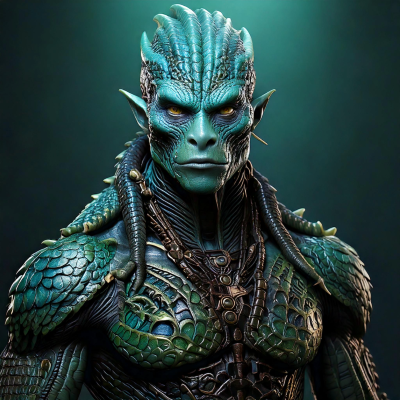
The Leng’gui are a semi-aquatic, humanoid race of aliens whose presence in the local cluster originates from the Chi star system and whose practices, society and technology are among the most advanced and enigmatic in the region. Although they prefer to take humanoid forms, their technology left such limitations to ancient history long before the Fell Wars. By that time, they already had the ability to move the consciousness of a being into any incarnate biology via complex astral-biological machinations. Among their daunting technologies that allowed this is the Chi Dasa, a gemstone that can store a living consciousness within it. Along with other similar tools the Leng’gui can both resurrect the deceased and move consciousness to biological forms that have little, if anything, in common with humanoid appearance.

Leng’gui are fiercely loyal to Heaven’s Guard and are as close to angelic as might be carnally possible. They possess a potent form of telepathy, seven sets of vocal cords and due to federated consciousness are capable of up to seven simultaneously separate thoughts at a time, which dwarfs most other humans limit of one. 

Everything about being and working with the Leng’gui is… complicated. One instrument used to bridge the gap between their capabilities and those of their peers is a simplified version of their language, known as Sekhut. Used first by Galatians to communicate with them natively when the situation required it, this language may be difficult, but it still only allows child-like speech and lacks entire octaves of syllables and grammatical structure. The result is that negotiations and encounters with the Leng’gui are replete with over-long fanfare and preparations to ensure the best chances of true understanding.

Aside from their technological and biological differences that might otherwise separate Leng’gui from their peers, this race also has an affinity with the hyper-advanced race of living structures known only as Gonago’lai who have chosen to work with them to terraform countless worlds. As one of the few species to successfully communicate more than rudimentary statements to these beings, the Leng’gui are critical bridges to and among the exceedingly few allies of a being that seems able to anchor reality itself by nothing but its presence.

Lastly, the social systems of the Leng’gui set it apart from most human systems in many ways. One of the more treacherous distinctions is that a practice common among other humanoids is highly offensive – so much so that the act has a name – (ra) or Blasphemy. Ra is the use of a title or name of a profession as a replacement for the name of the one who does the task. Considering that many human societies engage in this practice in the naming of their children or family lines, awareness of this powerful divergence can be a life and death lesson as it is highly offensive to Leng’gui.

The Dofa Tree

In the Li star system, on several of the moons around Haun’hai, known as the Belt Worlds, an unusual transplant from the jungle worlds of Chi has taken root, called the Dofa Tree. The Dofa, pronounced “doe fa,” is a slow-growing tree that prefers dark, shaded regions to grow in. It has deep, emerald leaves, long tresses of shiny, purple berries, and slick, white bark that sheds thin, glittering slivers of its skin throughout the year. First introduced to inhabitants of Miseo by traders arriving from the Chi system several millenia ago, this plant was initially mistaken for a bush native to that moon until they both outgrew their native doppelgangers and produced fruits with bizarre properties.

Dofa berries grow in clusters of grape-like fruit whose chewy skin has a strong, spicy licorice flavor that, when coupled with its juicy inner meat’s honey-like sweetness, makes for fantastic candy throughout the Belt Worlds. The patience required to wait for the trees to mature enough to harvest, combined with the fact that they only fruit every other year, might have made any foods or drinks made from Dofa berries a rarity. However, when the berries are fermented into ale with a particular lichen found most commonly on Miseo, the resulting mild euphoria demonstrates why both ordinary and pirate traders throughout the region have chosen to grow large orchards of the trees on the outskirts of coastal towns like Crashton. These effects, although not incapacitating, are reknown for their ability to ease pain and relax tense muscles that are overworked by long hours of labor in the turbulent seas or skies of Miseo.

One particularly unique tree has been celebrated at the famed “Gobesh Caves” just northwest of Crashton. This tree is mentioned in the archaeological wonder known as the “Tablets of Gobesh,” which document the strange time paradox that is colloquially known as the Haun’hai Incident. It was discovered and its base reinforced after the arrival of the SS Agape and her armada. It remains the oldest Dofa Tree in the system, at over 17,000 years old.

Pnunillion Weave

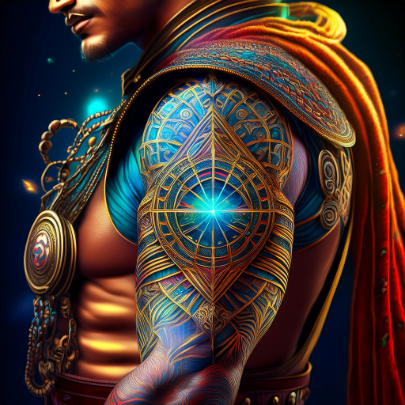
This Galatian bionanite technology was in widespread use by the beginning of the Fell War. It was adopted most by the military for several reasons, not the least of which was its ability to regenerate tissue on the battlefield. Pnunillion cells could be programmed to work together and to create biological as well as mundane materials, tools, and energy weapons. All of these features are controlled by the primary processor, which embeds itself next to nerve clusters in its host’s body, using them as a means of highly advanced communication. This connection allows the weave to “read the intentions” of its host. Generally delivered using a specialized transponder, this tool levels the field of combat for human armies, which often had to face otherworldly creatures capable of polymorphism, teleportation, astral projection, energy discharges, and electrical channeling. Pnunillion appears in the host as a colorful tattoo, often taking fractal shapes, patterns, or even letters. The size and depth of these tattoos are usually a measure of the potency of the effects that the weave offered.

Pnunillion’s power source is a carefully guarded secret. Rumors suggest that it is extra-dimensional, and especially advanced versions of this weave are capable of interfacing with what some Fell worlds refer to as the “supernatural” realm. Although both Galatian and Leng’gui cultures have discarded many mythological beliefs regarding the spirit world, they have also adopted others after advances in astral-biosciences proved two things definitively that were at odds with both colloquial views of spirits and limited classical scientific attempts to ignore evidence using purely material explanations.

  • First, the living essence of a being is not only very real, but it is arguably more real than some dimensions to which it interfaces. Souls are multidimensional, exotic material patterns that, although they can be altered or reshaped, cannot be reproduced or created by any known technology. Consequently, the creation of a soul is universally considered the exclusive realm of the Creator – known as the One from whom all Souls originate.
  • Secondly, the soul is a quantifiable, stable pattern of exotic energy that interfaces with material native to any dimension where it appears in high enough concentrations. Understanding of these facts has enabled advanced biological and technological structures to attach and respond to living intent at speeds and complexities that are simply not possible with traditional chemistry or mechanics alone.

Astral-bioscientists study these patterns that make up souls. Due to their more profound understanding of this form of physics, Pnunillion can operate with remarkable speed and demonstrate profound abilities to seemingly create and dispel material from and to nothing. Still, those who observe soul patterns in dense concentrations, such as those found in beings like the Gonago’lai and Seraphim, find that baffling and often contradictory abilities and features emerge. This observation leads to bizarre conclusions about the nature of the soul and the stigma associated with its study as a “spooky” science, despite any advances that the studies have contributed to technology.

L3

Jorge’s massive hands reached up to the black steel cage of the humanoid repair drone standing in front of him in the empty hangar of the Storge. Next to him, as always, his trusted companion, Sarah, stood silent and unsure. She had never seen this side of Jorge. Always before was a joke, a wink, or some sly grin that hinted at the twinkle in his brown eyes. Yet now the shadow that fell from his broad-brimmed sombrero was frail protection from the storm that she saw sweeping across his mustached, sober expression. The drone’s glowing blue eyes blinked once as Jorge patted its reticulated shoulder and then reached behind the steel ribs to detach the cords and cables binding a cubical-shaped module within the automaton’s chest to its spine and armatures, “My brother is in trouble, ol’ girl. I gotta put you in that bug, and if there is anyone who can make that beat up hunk of junk work, it’ll be you.”

As the drone blinked, Jorge grimaced and pulled the last cord. The eyes went dark, and the skeleton of the drone’s frame slackened as the machine became lifeless. Jorge gripped both sides of the cubical module and, with a yank and metallic click, the unit slipped free of the drone’s chest. Jorge lifted the heavy piece of equipment easily. It was tiny in his hands but showed its girth as he turned to face the frail, ebony frame of Sarah, who stood silent in front of Jorge, waiting. Jorge’s thumb rubbed the dust from off a logo on the upper corner of the charcoal metal box that read “L3”, and he stood there for a long moment, lost in thought, until she placed a tiny hand on Jorge’s forearm, “Brero? You ok?”

Jorge’s dark, black, bushy eyebrows knitted together as he replied absently, “Just remembering the one who designed this. He was trying to save something of his world, too.”

“What were ‘is name?” Sarah peered up through the dangling, makeshift tasseles of trinkets, tiny chains, and electronic bobs that hung from the heavy brim of Jorge’s non-regulation hat.

“Master Chief Miguel Lane. Best engineer on Sigma 95. That was before the Ifset rebellion, and his world fell apart.” Jorge replied, the sadness in his voice a poignant echo of some ghost long lost to another world. “I still remember the day he named this miracle. The first field replaceable Quasi-linear AI module. Could repair darn near anything. Best assistant an engineer could ever ask for on the field of battle.”

Sarah looked down, the ornate tangle of shimmering threads and makeshift jeweled ends of her weave catching faint sparkles of gold and green from the dim canister lights of the docking port ceiling above them. Jorge leaned in a little and continued, “Save you, of course.”

Sarah’s big brown eyes met his, and an appreciative smile spread across her lips. “So Lane, I get. I ev’n get linyar, if’n ye don’ count that crazy bit, but why L3? Is there a third ‘L’ somewhere in there, or ‘m I missin’ somet’ing?”

At that, Jorge looked Sarah squarely in the eyes, his own wet and slightly reddened. To see the pain on his face made a painful lump form in Sarah’s throat as he replied, “Asked the same question myself right outside the hospital room that he’d come out of that day. Sigma 95 had fallen. The death toll was staggering. I could spend the rest of my life just naming the lost, but on that day, there was only one name that mattered to the man who taught me everything I know.”

Sarah swallowed hard, “Sorry, Brero.”

“He told me that if it wasn’t for her, none of this would have ever existed.” Jorge lifted the box slightly, accentuating the module that he carried. “She was the one who held him together during the worst of it, and so it made sense to him that her brilliance and spirit would train the AI that was his life’s work in the hope that it could do the same for all broken vessels destroyed by this war.”

“Oh, Creator.” Sarah tried to deflect.

“That was the day that I learned the most important lesson of my career in the Galatian fleet. It’s the souls we meet; the love we have for each other that should be the first and last thing on our lips and hearts. The third L on this module stands for Laurie, Miguel’s wife. She died in an orbital hospital around Sigma 95. On that day, I made Miguel a promise that wherever I became the lead engineer, his wife’s memory would be installed in every unit in the fleet.”

“I think she’d be proud of what you’re doing here,” Sarah reassured Jorge.

Jorge nodded, and he stood up straighter, “To L3 then. We’ve got a world to save.”

Twin Flames Wine

This wine, served almost exclusively on special occasions, is among the single finest beverages produced by the Galat system. Made from a blend of fermented dofa berries and Galatian star fruit, then aged in caskets lined with Aether moss, this mildly hallucinogenic beverage is the stuff of legend. A single bottle is given once or twice in a century as a gift to a new couple and after the Fell Wars to the mourning parent, widow, or widower. This beverage, even after millennia, retains its exquisite, fruity, and spicy taste, but is rarely consumed for many reasons, not the least of which is its temporary effects.

Twin Flames is renowned for its ability to blur the line between the material plane and nearby planes of existence through a complex process that, in layman’s terms, faintly decouples the soul from the corporeal body, allowing for otherwise impossible forms of perception. The wine, when unopened, is cerulean in color, sometimes with faint greenish and yellow reflective flecks floating within it. Upon exposure to the air, the liquid will react energetically and begin to swirl with luminous streams of emerald light as the wine’s ingredients mix, releasing a faint scent reminiscent of star anise. Effects range from gentle halos around nearby living beings to more pronounced ability to see spiritual essence, the connective threads between living forms, and even items on parallel planes of existence. These experiences are brief and leave no lasting impact, except by virtue of the memories they create. They usually serve the function of accentuating the connections between mates or providing comfort and closure to mourners, as they often report being able to move on more easily after the experience.

Rali

Sekhut cuneiform was created by the Leng’gui to allow human civilizations to communicate with their species and is a tiny fragment of its mother tongue which has more in common with celestial languages than most other corporeal forms of communication. One particular word, Rali (pronounced “Ra lay”), is a good example of the flexible and often metaphysical nature of the Leng’gui thought and communication process. Rali is a word that describes emotional and spiritual connection, similar to what humans call “love” and is conveyed as a root for words like:

  • geor’rali – Storge is a bond to a family
  • georsh’rali – Phileo is a bond to a sibling
  • gakli’rali – Eros is a bond to a mate
  • goornat’rali – Pragma is a bond to a series of tasks
  • goy’rali – Philos is a bond to a friend
  • gaor’rali – Thelema is to bond to a vocation or aim to do a thing
  • gi’rali – Agape is a bond to the Creator

Unlike many human languages, Rali can be attached to almost any other subject to mean the emotional and spiritual bond that a living soul endows to that subject. The fluid nature of Leng’gui treatment of love also hints at one reason that their culture has a strong distaste for prestige and title. According to the Leng’gui the tasks, vocation or relationship to a thing does not itself have meaning as a static label. Rather, it is the living essence of the one who does or relates to a thing that gives value and definition to the subject of that thing. Being reduced to a label, implies that the person can be summed up simply and that the soul gains value by the titles it possesses, but to Leng’gui exactly the opposite is true. Love therefore is the act of lending one’s own intrinsic value to the thing it acts upon or describes, not the other way around.

One side-effect of this approach is both enlightening and confusing because it literally means that love can be attached to a person directly. For example, Mary-Love or Mary’aurali is not merely the objective love of that person. Rather it is the love shared by bonding to Mary and only Mary. It is both unique and impossible to reproduce even if the connection itself can be moved. As a consequence of this pattern Galatians who apply to work with the Leng’gui consulate are at first shocked and overwhelmed by the initial requirements to spend no less than five years among those working on any Leng’gui project. However, after only a few months the reasons for this restriction become clear to recruits as it is often necessary to learn numerous words, phrases and expressions unique to only one team on one project before they can be effective at representing any part of that group.

Pajong Gai

These tasty fish with the tails of seals are not only a major food source on the moons of Huan’Hai, such as Miseo, but also the namesake for Lake Pajong Gai, on whose shores rest several small villages and legendary sites. The chief among these sites is Aerishael, which is conveniently located near a large enclave of these creatures. Like fish, Pajong Gai spawn huge populations quickly, and their egg clusters are also, in some locations, considered a delicacy. Even though these creatures spend most of their time swimming through lakes and bays, they are also capable of extended stays on rocky outcroppings, where they sunbathe and warble, mimicking the sounds of birds, other wildlife, or even machines nearby.

Pajong Gai are not particularly intelligent, and if their populations are left unchecked, they can become a nuisance. They have no sense of personal space and are drawn to cluster in, on, or near almost any form of artificial structure or body that gives off heat. To control their populations, fishing of them is encouraged, and their meat is sweet and tender, making them a popular main course for everything from soups and fillets to sandwiches and caviar.

Zatcha – Zed’Chi Weaponry

The Galatian Empire, like most of its peers, is peaceful. However, the Fell Wars that split one-third of heaven forced the creation of some truly terrifying weapons. Few advancements demonstrate this more clearly than what common folk refer to as “Zatcha” weapons, like the Zatcha pistol and Zatcha blade.

The name “Zatcha” is a mispronunciation of the original Leng’gui terms “Zed” and “Chi,” meaning Chemical Spirit. This translation does not adequately describe the extraordinary threat of this brand of heaven’s arsenal. Based, in part, on Leng’gui technology designed to provide safe and harmless travel of the soul to and from alternate dimensions, weapons built on these principles separate the soul from its targets. Advanced forms of these tools, which are highly restricted, are capable of trapping that soul within Chi Dasa stones for transport or virtually indefinite storage.

A select few among the highest officials in the Leng’gui Consulate and Galatian Navy believe that Zatcha technology might be used to erase a soul from existence – a crime so dire that it is both sacrilege and blasphemy against the Creator to use it. Research into such knowledge is forbidden at the highest levels, and any semblance of such a tool or research being conducted is met with fierce and swift response by heavenly forces. Recently, however, lay persons in Galat and Li have whispered rumors that this technology was being researched on Sigma 95 and may have something to do with the reason the moon of Gethsemane around Huan’Hai has been quarantined by angelic forces since the Huan’Hai Incident.